
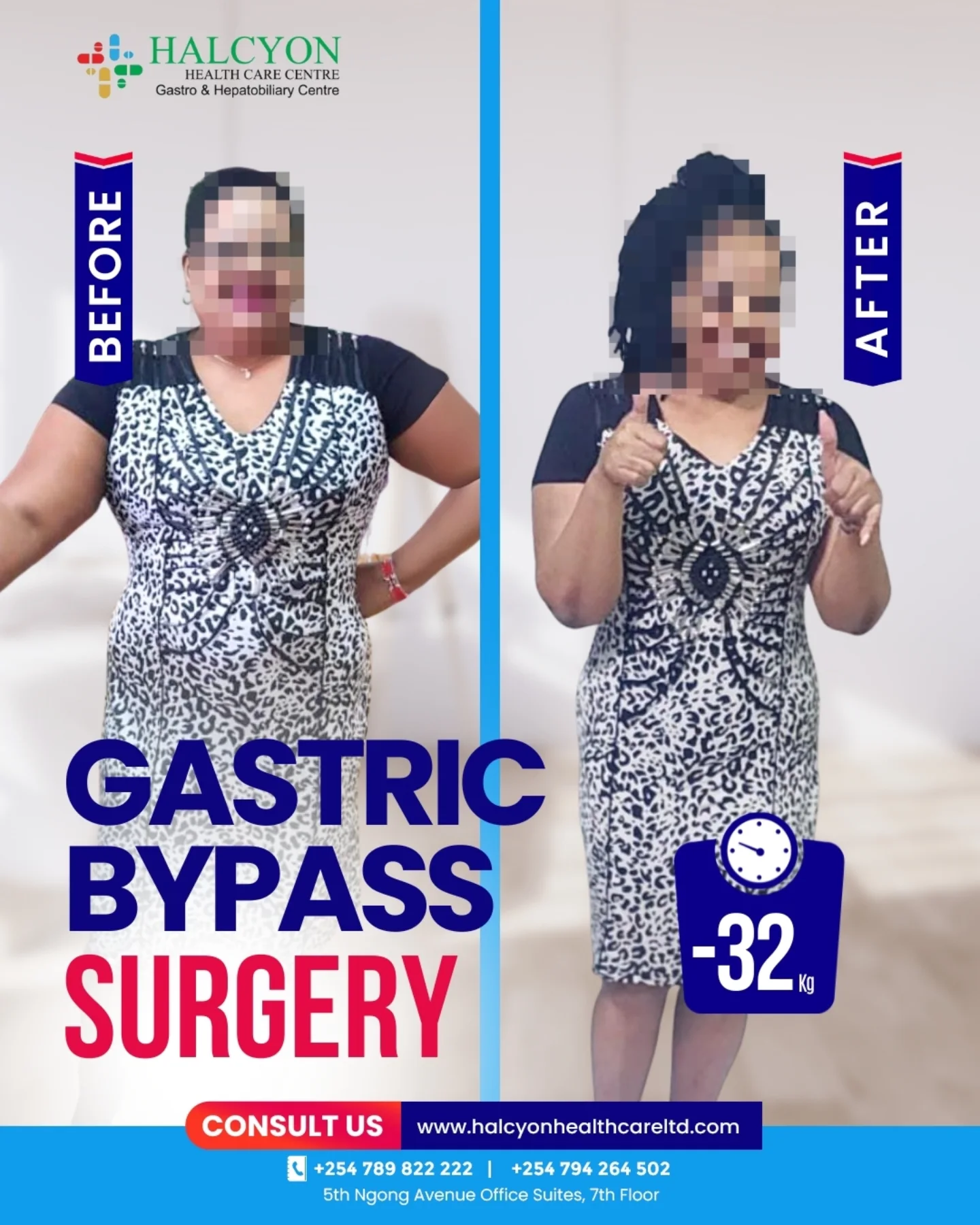
Lose Up To 70-80% of Your Excess Body Weight with Gastric Bypass Surgery Kenya
Gastric Bypass is a minimally invasive (laparoscopic) weight loss surgery that helps people with obesity lose about 70–80% of their excess body weight. It works by creating a smaller stomach and reroutes part of the small intestine, helping you eat less, absorb fewer calories, and achieve long-term weight loss.
- Up to 70-80% of Excess body Weight loss
- For BMIs above 40
- Laparoscopic Surgery (smaller scars)
- Rare bleeds, infection post-op
- Shorter Hospital stay
On average, patients can lose 70–80% of their excess body weight, especially when the surgery is combined with healthy eating, regular physical activity, and ongoing medical support.
Beyond Weight Loss
Beyond weight loss, Gastric Bypass can also help improve or even resolve many obesity-related health conditions, including:
- Type 2 diabetes
- High blood pressure
- High cholesterol
- Sleep apnea
- Fatty liver disease
- Joint pain
- Heart disease risk
Benefits
- Significant and sustained weight loss
- Improvement or resolution of obesity-related conditions such as diabetes, hypertension, and sleep apnea
- Long-term effectiveness compared to non-surgical weight loss methods
Disadvantages
- Potential for complications such as infection and blood clots
- Risk of nutritional deficiencies requiring lifelong vitamin and mineral supplementation
- Major surgery with associated risks and recovery time
Complications
- Infection (<1%)
- Blood clots (deep vein thrombosis or pulmonary embolism) (<1%)
- Hernias (<1%)
- Leakage at surgical connections (<1%)
Side Effects
- Nausea and vomiting (20–30%)
- Dumping syndrome (early and late) (30–50%)
- Nutritional deficiencies including iron, vitamin B12, and calcium
Gastric Bypass - How does it Work?
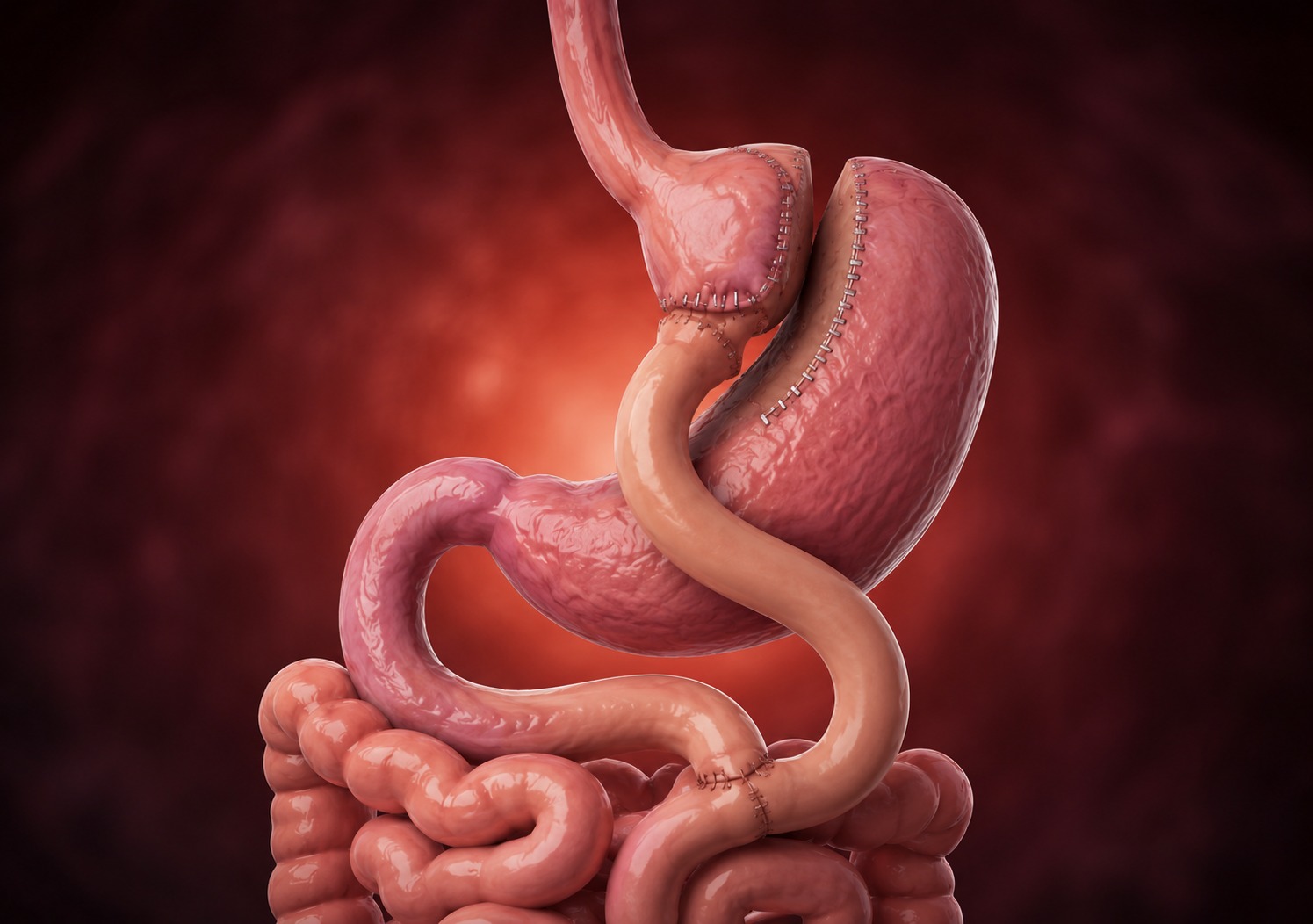
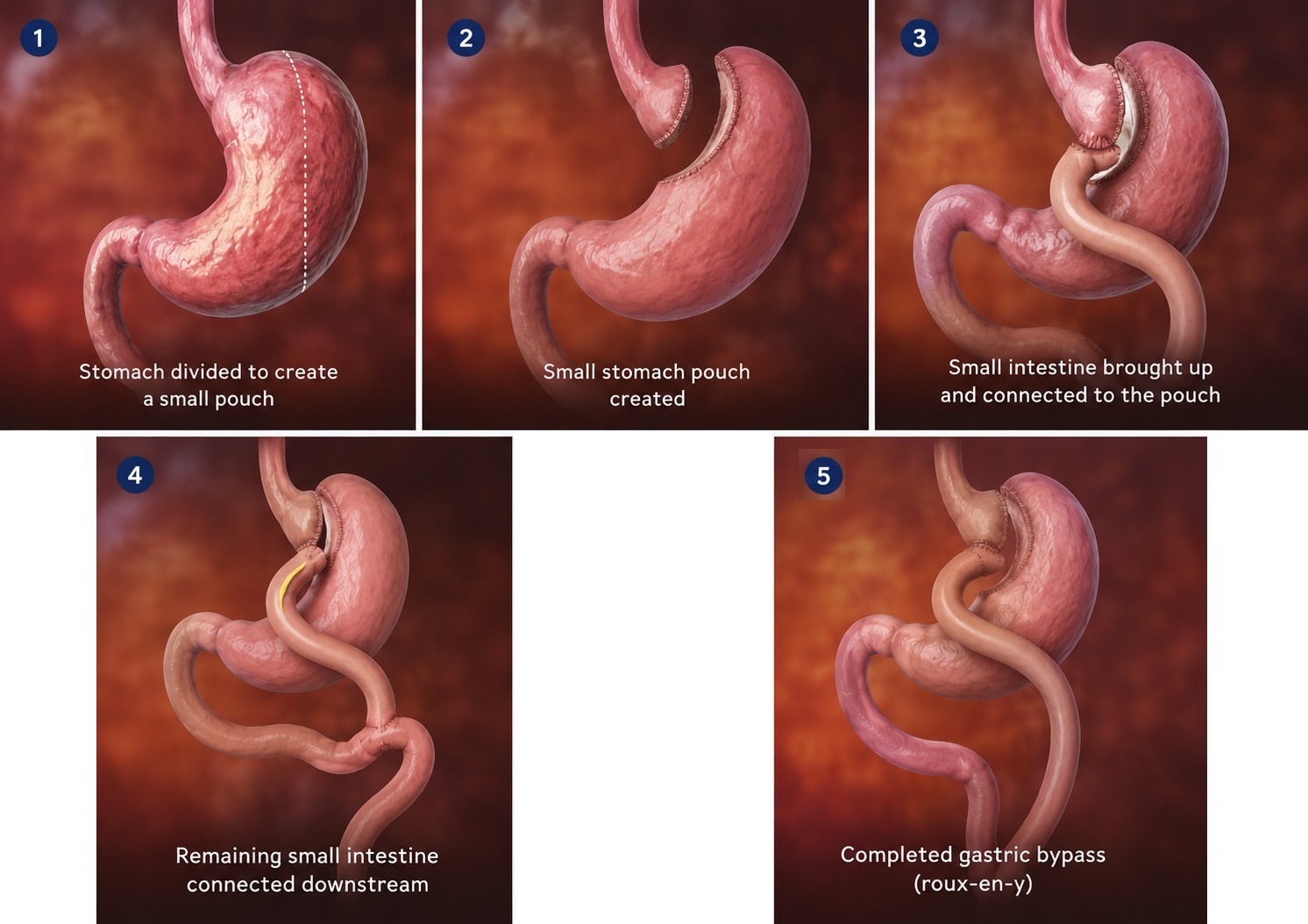
Laparoscopic Roux-en-Y Gastric Bypass is a procedure where small cuts are made in the belly while the person is asleep.
- Minimally invasive 1-3 hours Surgery
- Up to 3 days Hospital Stay
- First few months rapid weight loss
- For BMIs Above 40
- 70% Total Body weight loss
Gastric Bypass Works By:
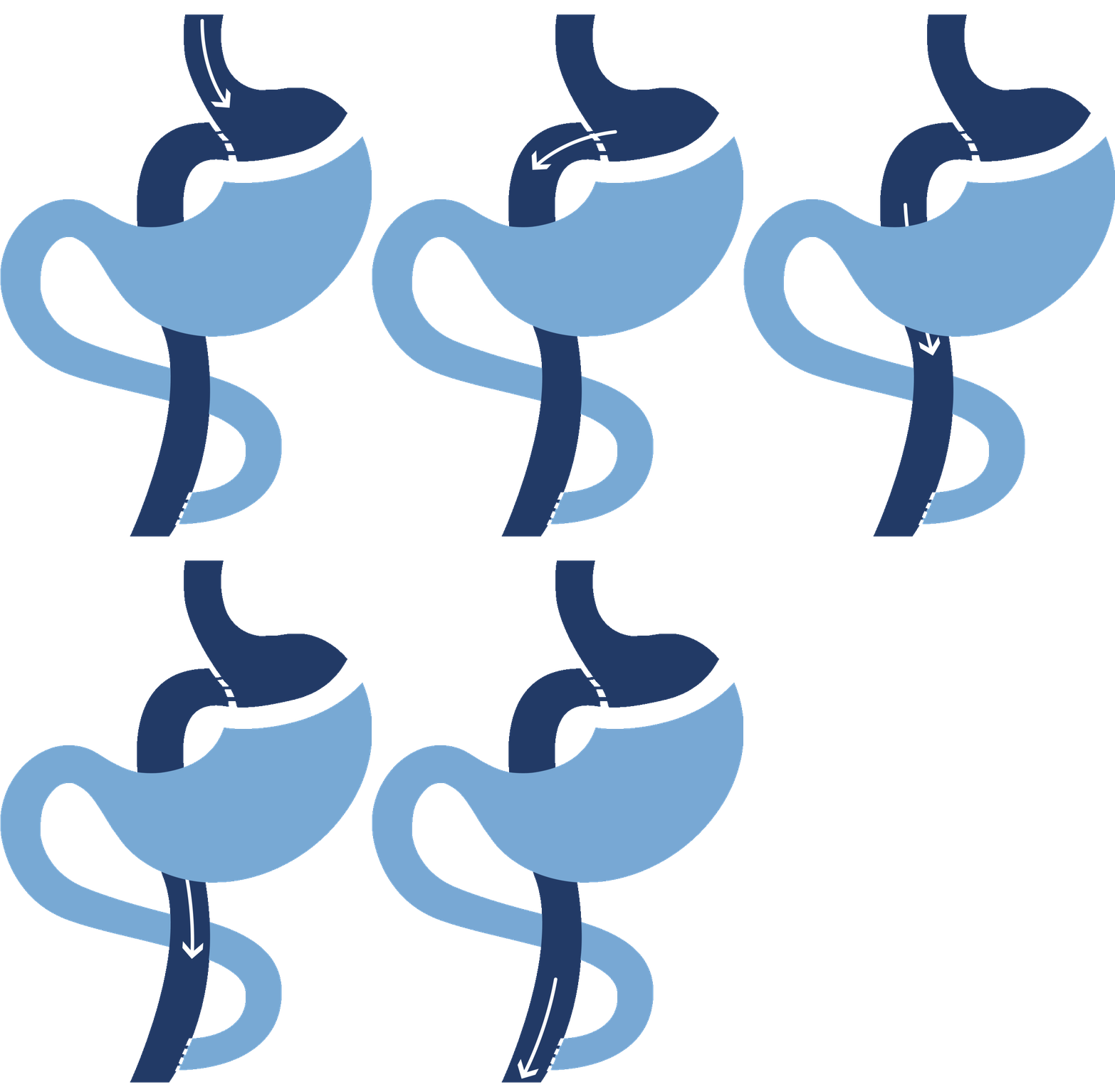
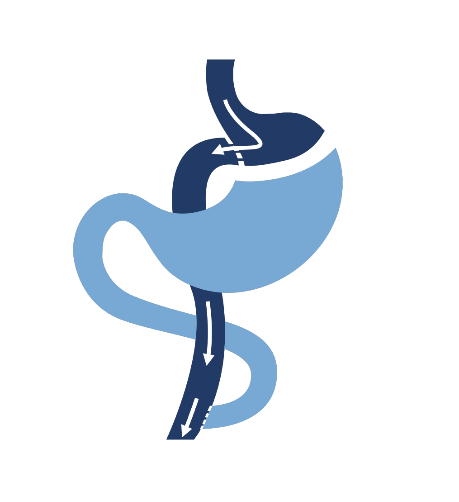
- Food Restriction: The stomach is divided into a larger & smaller pouch about the size of an egg. As a result, patients feel full faster, eat less, and food intake is reduced.
- Reduced Food Absorption: The small pouch stomach is connected directly to the intestines, shortening the digestion process and reducing the absorption of fats from food consumed.
GASTRIC BYPASS PROGRAM INCLUDES:
Surgeon & Anaesthesia Fees
Private Room Hospital Stay
Specialists Consults ~ 50 Visits
Full Body Lab & Imaging ~ 50 Tests
Pre & Post Procedure Medication
Colon Hydrotherapy
Psychologist & Support Groups
FREE Life Long Support
How to get started
Step 1: Pre Procedure (Specialist Consults & Evaluations)
Specialist Consultation for ideal procedure, tests & other preps weeks before.
Eligibility Criteria
- Body Mass Index (BMI) of 40 or higher, indicating severe obesity (class III).
- BMI of 35 or higher, accompanied by obesity-related health conditions (e.g., diabetes, high blood pressure, sleep apnea, heart disease, cholesterol).
- Previous unsuccessful attempts at weight loss through diet, exercise, and other non-surgical methods.
- Pre-surgery consultation is essential to evaluate individual medical and surgical history.
Consultations & Tests (Weeks Before)
- Pre-Op consultations with Doctor, Surgeon, Nutritionist, Psychotherapist, and Trainers.
- Full Body Labs (Blood analysis) to ensure physical fitness.
- Imaging tests including Ultrasound and Upper Endoscopy (OGD).
- Gut detox and cleanse program.
Benefits of the Procedure
Medical: Obesity-related conditions like type 2 diabetes, high blood pressure, cholesterol, infertility, and heart disease risk are significantly reduced. It also facilitates long-term control or remission of type 2 diabetes.
Physiological: Reduction or elimination of back/joint pain, improved breathing, increased energy levels, and reduced depressive symptoms.
Psychological: Dramatic improvement in overall quality of life, self-confidence, self-image, and satisfaction in social activities.
Step 2: The Procedure & Admission
Admission & Surgery
- Admission: You will be welcomed to your private room, complete medical documentations, and prepare for the procedure.
- Anesthesia: Performed under general anesthesia to ensure you feel no pain.
- Minimally Invasive: Done laparoscopically, leaving minimal scars and supporting rapid recovery.
How It Works
- Food Restriction: The stomach is partitioned into a small pouch (about the size of an egg), which limits food capacity and induces early satiety.
- Reduced Food Absorption: The small pouch is connected directly to the small intestine, shortening the digestive pathway and reducing calorie/fat absorption.
Hospital Stay: Typically includes 2 days of inpatient stay where the medical team monitors vitals and manages post-op symptoms (such as pain) before discharge with detailed recovery guidelines.
Step 3: Post-Procedure Recovery & Life-long Follow-up
Diet & Supplements
Dietary Progression: A phased transition starting with a clear liquid diet within 24 hours, advancing to full liquids, soft foods, and eventually regular solid foods under strict nutritional guidance.
Dumping Syndrome Prevention: Reduce simple sugars (honey, syrups, white sugar). Chew slowly and fully, and avoid drinking liquids 30 minutes before or after meals.
Supplements: Lifelong daily vitamins and mineral supplements (such as Vitamin B12 and iron) are recommended to prevent deficiencies.
Recovery & Stabilization
Timeline: Full recovery takes a few weeks. Laparoscopic patients can usually return to work within 1 week, but must avoid strenuous physical activity initially.
Symptom Management: Temporary side effects during rapid weight loss may include body aches, dry skin, mood changes, and temporary hair thinning. These stabilize over 12 months as weight reaches optimum BMI.
Precautions – Tell your doctor right away if you experience:
- Fever
- Wound becomes painful, hot, or leaks fluid
- Coughing or trouble breathing
- Persistent vomiting or diarrhea
- Pain in the abdomen, chest, shoulder, or legs
GASTRIC BYPASS VS GASTRIC SLEEVE
When considering gastric bypass versus gastric sleeve surgeries, the choice depends on factors like BMI and the severity of obesity-related health issues. Gastric bypass is recommended for those with a BMI over 40, especially if they have serious medical problems. This procedure significantly reduces both food intake and nutrient absorption. On the other hand, gastric sleeve surgery focuses primarily on reducing food intake and is less complex, leading to fewer complications.
While the sleeve is simpler, gastric bypass requires careful nutritional follow-up and supplements to prevent long-term issues. Potential risks with gastric bypass include gallstones, gastric dumping syndrome, bowel habit changes, excessive loose skin, and malnutrition. It's crucial to adapt eating habits after bypass surgery to minimize these risks. Despite the risks, gastric bypass has a lower likelihood of weight regain and often achieves more significant weight loss compared to the gastric sleeve. The decision between the two procedures should be based on individual health conditions, with a commitment to necessary lifestyle changes for optimal outcomes.
What to Eat in the First 6 Weeks After Gastric Bypass Surgery?
1st Week After Gastric Bypass Surgery:
During the initial week of post-gastric bypass surgery, a liquid-based diet is recommended. Options include meat broth, chicken broth, diluted apple and vegetable juices, sugar-free compote, skimmed milk, and diluted salted yoghurt drinks made from nonfat or half-fat yoghurt. Incorporating Qnt or whey protein powder is advised to ensure adequate protein intake, along with sugar-free herbal tea for hydration.
2nd Week After Gastric Bypass Surgery:
Expanding on the liquid diet, the second week introduces blended soups without grains. Unseasoned soup, fish soup, noodle soup in chicken broth, tomato soup without tomato paste, yoghurt soup, and lentil soup become viable options. This phase focuses on maintaining a smooth transition from liquid to more textured foods.
3rd Week After Gastric Bypass Surgery:
As the third week approaches, soft and crushed foods become permissible. Foods rich in protein and calcium are prioritized in the Soft Juicy/Puree diet, offering a broader range of options. Choices include soft-boiled eggs, lean curd, non-fat yoghurt, fruit puree, vegetable puree, spinach puree, tuna puree, and mashed potatoes with cheese. Additionally, diabetic custard and thick fruit yoghurt are recommended alternatives.
4th and 5th Week After Gastric Bypass Surgery:
The fourth and fifth weeks introduce consistencies that can be crushed with a fork. Options expand to include vegetable puree with mushrooms, soup with meat, yogurt soup, seasoned meatballs in a pot meal, and cheese omelets. These weeks mark a gradual progression toward more textured and solid foods, supporting the recovery process.
6th Week After Gastric Bypass Surgery:
By the sixth week, a transition from protein-rich calories to a low-calorie diet is initiated. While any solid food can be consumed in the long term, a gradual approach is recommended. Cooking dishes in meat or chicken broth remains beneficial for protein intake. Ensuring a sufficient daily protein intake is emphasized during this phase, contributing to the overall success of the recovery journey.
Start your Safe & Sustainable Weight loss journey here


Explore More Options
Why Choose Us
Dedicated Specialist Team
Multidisciplinary care from surgeons, nutritionists, and psychologists.
Private Specialized Wing
Exclusive, private recovery suites for bariatric patients.
Lifelong Support
Continuous monitoring to ensure sustainable results and health.
Safe & Proven Methods
Utilizing the latest bariatric surgical and non-surgical technologies.
Book Your Free Consultation
Pick a date and time that works for you. Our specialist will confirm and guide you on the right path to a healthier life.
Still have questions? We're here.
-
Call / WhatsApp +254 789 822 222
-
Email Us info@nairobiweightloss.com
-
WhatsApp Chat with us now
-
Working Hours Mon–Fri: 8:00 AM – 5:00 PM
Sat: 8:00 AM – 2:00 PM
Why book with us?